

Some of the most common things we hear from patients are:
- “I’m just getting older.”
- “I guess this is what happens in my 40s.”
- “I’m just tired all the time now.”
- “My metabolism must be slowing down.”
Fatigue, weight gain, brain fog, poor sleep, and stubborn belly fat are often brushed off as a normal part of aging.
And while aging does bring physiological changes, many of these symptoms are not inevitable.
Sometimes what looks like “just being tired and gaining weight” is actually early metabolic dysfunction. In some cases, it may even meet the criteria for metabolic syndrome.
Understanding the difference matters, because early metabolic changes are often reversible when addressed early.
What Is Metabolic Syndrome?
Metabolic syndrome is not a single disease.
It is a cluster of metabolic risk factors that tend to occur together and increase the risk of:
• Type 2 diabetes
• Cardiovascular disease
• Stroke
• Fatty liver disease
A diagnosis of metabolic syndrome is typically made when three or more of the following are present:
• Increased waist circumference
• Elevated fasting blood glucose
• High triglycerides
• Low HDL cholesterol
• Elevated blood pressure
From a conventional standpoint, these are measurable lab and biometric thresholds.
From a functional medicine perspective, metabolic syndrome reflects something deeper:
impaired metabolic flexibility and insulin resistance.
But here’s an important point.
Many people develop symptoms years before their labs cross into diagnostic territory.
Early Metabolic Dysfunction
Before someone meets the criteria for metabolic syndrome, there is often a long period of subtle warning signs.
These may include:
- Midday energy crashes
- Cravings for sugar or carbohydrates
- Brain fog
- Difficulty losing weight despite dieting
- Increasing belly fat
- Poor stress tolerance
- Sleep disturbances
- Elevated fasting insulin, even when glucose appears “normal”
These symptoms are frequently dismissed as stress, lifestyle, or aging.
But they can reflect early insulin resistance and metabolic inflexibility.
In other words, the system is struggling long before the labs show it.
Why “Just Being Tired” Isn’t Always Just Fatigue
Chronic fatigue can have many causes.
But in the context of metabolic dysfunction, it often relates to unstable blood sugar and impaired cellular energy production.
When insulin signaling becomes less efficient:
- Cells struggle to use glucose effectively
- Blood sugar fluctuates more dramatically
- Energy highs and crashes become common
- Cortisol may rise to compensate
Over time this can create a pattern many people recognize:
Feeling wired but tired.
You may rely on caffeine to function during the day, yet feel alert at night and struggle to sleep.
Weight Gain vs. Metabolic Dysfunction
Weight gain alone does not automatically mean metabolic syndrome.
However, certain patterns are more concerning:
- Increasing abdominal fat
- Weight gain despite unchanged caloric intake
- Difficulty losing weight even with calorie restriction
- Rising fasting insulin levels
Abdominal fat is metabolically active. It produces inflammatory compounds that can worsen insulin resistance.
In many patients, the pattern looks something like this:
Stress increases → sleep declines → cortisol rises → insulin resistance develops → abdominal fat accumulates → inflammation increases → fatigue worsens.
Because this happens gradually, it is often attributed simply to “getting older.”
Aging vs. Metabolic Changes
It’s true that metabolic physiology changes with age.
Insulin sensitivity may decline.
Muscle mass often decreases.
Hormones shift.
But aging does not automatically mean metabolic syndrome.
The difference lies in factors such as:
- Degree of insulin resistance
- Levels of systemic inflammation
- Hormonal resilience
- Muscle mass and metabolic flexibility
- Mitochondrial efficiency
Two people of the same age can have dramatically different metabolic health profiles.
When symptoms are dismissed as aging alone, opportunities for early intervention are often missed.
Commonly Overlooked Symptoms of Metabolic Dysfunction
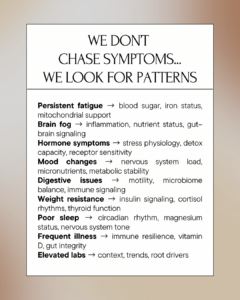
Many people are surprised to learn that these symptoms can also have metabolic roots:
- Brain fog
- Irritability when meals are delayed
- Sugar cravings after dinner
- Waking between 2–3 AM
- Afternoon energy crashes
- Increased PMS or hormonal fluctuations
- Skin tags or darkened skin folds
These can be subtle clues that metabolic signaling is becoming dysregulated.
Looking Beyond the Basic Labs
Rather than waiting for a formal diagnosis, functional medicine focuses on earlier indicators of metabolic stress.
Areas we often evaluate include:
- Fasting insulin
- Hemoglobin A1c trends
- Triglyceride-to-HDL ratio
- Inflammatory markers
- Liver enzymes
- Thyroid function
- Body composition
- Sleep quality
- Chronic stress load
The goal is to identify metabolic stress patterns early, when they are far easier to address.
What Can Be Done?
If symptoms are emerging but labs still appear “normal,” this can actually be an important window of opportunity.
Core strategies often include:
- Stabilizing blood sugar with balanced, protein-rich meals
- Building muscle mass through resistance training
- Improving sleep consistency
- Reducing chronic stress load
- Addressing micronutrient deficiencies
- Supporting liver function
- Optimizing thyroid and hormone balance
Small shifts in metabolic signaling can lead to significant improvements in energy, metabolism, and long-term health.
The body is remarkably adaptable when supported early.
Ready to Look Beneath the Surface?
If you’re experiencing fatigue, brain fog, stubborn weight gain, or metabolic shifts that have been dismissed as “normal aging,” it may be worth taking a closer look.
A deeper metabolic assessment can help identify early changes and guide a personalized plan to restore energy, metabolic flexibility, and long-term health.
Book an appointment to explore your next steps.
References
- Alberti, K. G., Eckel, R. H., & Grundy, S. M. (2009). Harmonizing the metabolic syndrome. Circulation, 120(16), 1640–1645.
- DeFronzo, R. A., & Tripathy, D. (2009). Skeletal muscle insulin resistance. Diabetes Care, 32(Suppl 2), S157–S163.
- Grundy, S. M. (2016). Metabolic syndrome update. Trends in Cardiovascular Medicine, 26(4), 364–373.
- Hotamisligil, G. S. (2017). Inflammation and metabolic disorders. Nature, 444(7121), 860–867.
- Shulman, G. I. (2014). Ectopic fat in insulin resistance. Journal of Clinical Investigation, 124(1), 3–10.
- Samuel, V. T., & Shulman, G. I. (2016). The pathogenesis of insulin resistance. Cell, 148(5), 852–871.

Written By:
Michael Reid
More By This Author